





Tariffs are often promoted as a way to protect domestic industry. For railroad workers, the reality is far more concrete and far more immediate. Freight rail sits downstream of nearly every trade decision. When trade slows, rail volume falls. When volume falls, labor absorbs the shock long before capital does.
Railroad workers do not experience trade policy as an abstraction. They experience it as fewer trains called, fewer jobs bulletined, and more “temporary” operational changes that quietly become permanent.
Railroad Regions Most Exposed to Trade Shocks:
The Midwest is the most exposed region for railroad labor because it concentrates both sides of trade-sensitive freight. Auto plants, parts suppliers, steel-using manufacturers, and farm equipment producers all rely on inbound components and outbound finished goods. At the same time, grain, ethanol, and agricultural exports depend on consistent foreign demand. When tariffs trigger retaliation, railroads lose carloads in both directions. The result is fewer road jobs, reduced yard assignments, and service track and shop staffing placed under pressure at the same time.
The Southeast faces a different but equally serious risk profile. Intermodal terminals tied to ports such as Savannah, Charleston, and Jacksonville depend on imported components and export-bound finished goods. Auto assembly plants and aerospace suppliers generate steady rail demand only when global supply chains remain intact. When tariffs raise input costs or disrupt shipping schedules, rail volume drops faster than rail labor agreements can adapt. Crews feel the impact through reduced starts and tighter manpower planning, while mechanical forces see work deferred rather than expanded.
The Plains and Farm Belt are often the first regions where railroad workers feel retaliation. Grain, soybeans, and protein exports are easy political targets and highly sensitive to price changes. When export contracts vanish, unit trains vanish with them. Grain shuttles sit idle, elevator turns slow, and seasonal work that railroads rely on simply does not materialize. Federal farm assistance may follow, but it does not replace lost rail volume or protect railroad jobs.
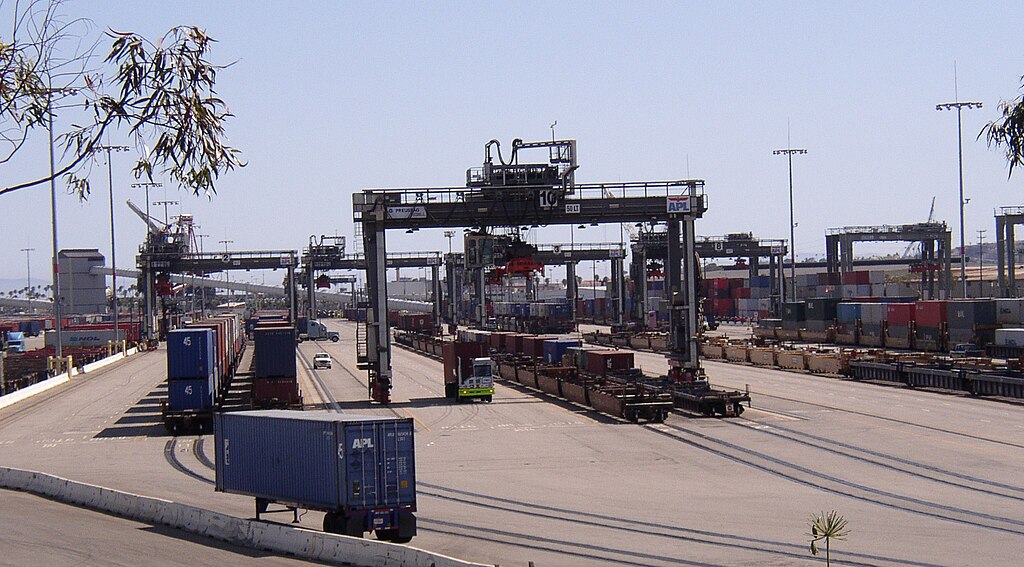
On the West Coast, the early signs are subtle. Container volumes decline, but instead of immediate layoffs, railroads cut starts, reduce overtime, and consolidate assignments. Intermodal traffic reroutes, docks slow, and rail-served warehouses reduce hours. By the time layoffs appear, the underlying traffic loss has already become structural.
Rail Industries and Crafts Under the Greatest Pressure
Railroad exposure mirrors freight composition. Bulk commodities tied to export markets fall first. Intermodal traffic follows quickly when trade volumes contract. Automotive, machinery, and steel-using industries reduce shipments even when steel production itself remains stable. The misconception that tariffs “help steel” collapses when viewed from rail labor’s perspective. Steel mills may continue operating, but the downstream industries that move steel-using products generate far more rail jobs—and those are the jobs that disappear.
Mechanical and shop forces face a delayed but dangerous effect. When traffic falls, locomotives are stored rather than repaired, heavy repair cycles are extended, and capital projects are postponed. The work does not disappear overnight, but it stops growing. That stagnation is often the first step toward permanent reductions.
How Railroad Labor Gets Squeezed in Tariff Cycles
The sequence is familiar to railroad workers.
First comes the cost and volume shock. Railroads respond by cutting starts, freezing hiring, and reducing overtime. Management describes this as temporary volatility tied to trade uncertainty. From labor’s perspective, earnings fall immediately.
Next comes concession pressure. As traffic declines, railroads argue that flexibility is required to remain competitive. That pressure shows up in demands for relaxed crew consist rules, deferred maintenance windows, delayed hiring classes, and pressure on craft separation. Even when agreements are not formally reopened, the leverage shifts sharply toward management.
If trade disruption persists, restructuring follows. Traffic lanes are consolidated, terminals are downgraded, and certain yards or shops are quietly reclassified as non-core. Work is rerouted, not lost on paper but lost in practice. By the time furloughs occur, bargaining power has already eroded.
Eventually, public policy steps in through subsidies, exemptions, or emergency programs. Those measures stabilize corporate balance sheets, but they do not restore rail jobs or undo concessions. When traffic partially returns, the workforce does not.
The Warning Signs of Irreversible Damage for Rail Labor
The most critical signal is traffic rerouting becoming permanent. When shippers redesign logistics away from U.S. ports, switch to foreign suppliers, or lock in alternative corridors, rail traffic does not rebound even if tariffs are lifted. Railroads cannot haul freight that no longer moves through their network.
Capital behavior offers another warning. When railroads cancel yard expansions, defer terminal upgrades, or limit shops to maintenance-only spending, they are signaling a smaller future footprint. Infrastructure investment stops long before layoffs begin.
Employment patterns provide confirmation. Early damage shows up as furloughs. Permanent damage appears as attrition. Retirements go unreplaced, training classes shrink, and apprentice pipelines dry up. That is not a response to a temporary downturn. It is workforce planning for a reduced operation.
Finally, listen to how railroad management describes the situation. Temporary disruption is framed as volume headwinds or short-term softness. Permanent retreat is described as network optimization, corridor rationalization, or focus on core lanes. That language signals exit.
The Bottom Line for Railroad Workers
Railroad labor sits downstream of trade decisions it does not control. Regions tied to ports, export commodities, and complex supply chains are hit first. Crew starts and shop work fall before profits do. Once traffic is rerouted and capital investment stops, the loss is permanent.
Tariffs do not fail because railroad workers lack resilience. They fail because freight markets adapt faster than labor agreements, and railroad workers absorb the delay – one abolished job at a time.